About Lexly
Bringing transparency to attorney accountability
The Problem
Court proceedings and attorney disciplinary records are technically public information, yet they remain remarkably opaque and difficult to access. There is no easily searchable, publicly accessible website for looking up the nationwide background of an attorney.
This opacity creates serious problems. An attorney disbarred in one jurisdiction may attempt to conceal their history by seeking licensure through reciprocity in another state. While bar associations maintain records, information regarding an attorney's criminal history, civil litigation, pattern of sanctions, theft, abuse, or outright fraud is shockingly difficult to discover.
Attorneys understand how the system works. They can leverage their legal knowledge to intimidate publications from sharing negative but true information about them, effectively suppressing legitimate public interest reporting about their misconduct.
A Case Study: John Du Wors
Consider the case of attorney John Du Wors. Despite being found to have committed fraud, deceit, and misrepresentation - including insurance fraud - and despite being charged with beating his wife and hog-tying his daughter, sanctioned by courts, and sued for fraud and malpractice, Du Wors has spent non-trivial effort planting "marketing" websites designed to obfuscate Google search results regarding his history.
This is not an isolated case. Many attorneys with serious ethical violations and even criminal conduct actively work to bury their past, making it nearly impossible for potential clients to make informed decisions about who represents them.
Our Mission
Lexly is a work in progress. We are building a platform to aggregate and surface publicly available information about attorneys across all U.S. jurisdictions. This work is significant and intentionally slow-moving - we want to respect rate limits when crawling information sources and ensure we're processing data responsibly.
Our vision extends beyond simple search. We are working to process and index disciplinary documents and court docket PDFs using vector search, building toward a knowledge pipeline where people can chat with the system to learn about attorneys and their history. Think of it as building toward a "Rotten Tomatoes for attorneys" - digesting information across multiple sources and combining it into an easily understandable score or rating.
Our ultimate goal: help people identify and avoid the truly dishonest, life-altering, corrupt attorneys who exploit the system's opacity to continue practicing despite patterns of misconduct. Information that is technically public should be practically accessible.
About the Name
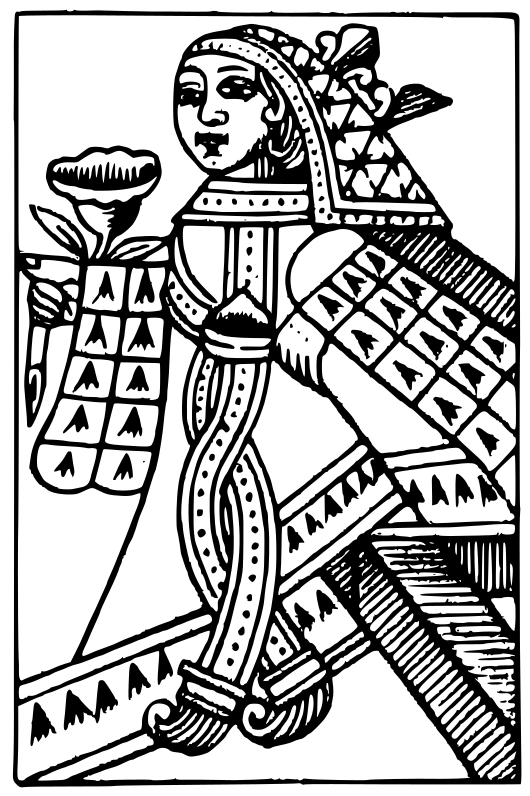
Lexly is a play on "lex," the Latin word for law. The site's mascot - the queen from chess and playing cards - represents the most powerful piece on the board, one that can move in any direction and see across the entire field.
Like the queen, Lexly aims to provide a comprehensive view across jurisdictions, cutting through the barriers that traditionally fragment attorney accountability information.
Data Sources
We strive to pull information exclusively from authoritative sources:
- State bar association member directories
- Official disciplinary publications and orders
- Court dockets and case filings
- PACER and CourtListener federal court records
In the future, we hope to create a workflow through Git where individuals can present or augment any information they wish to contest. However, such review activities are resource-intensive and we may not reach that capability for some time.
Disclaimer
Nothing on this website constitutes legal advice. Lexly aggregates publicly available information for research and transparency purposes only. We do not make legal judgments or recommendations about any attorney's fitness to practice.
The presence of disciplinary records does not necessarily indicate current fitness to practice, and the absence of records does not guarantee an attorney's suitability for any particular matter. All information should be independently verified through official sources.
It is critical that anyone using this resource conduct their own research. We are a work in progress with limited resources, and while we strive for accuracy, errors may exist. Always verify information directly with the relevant bar association or court before making decisions based on what you find here.